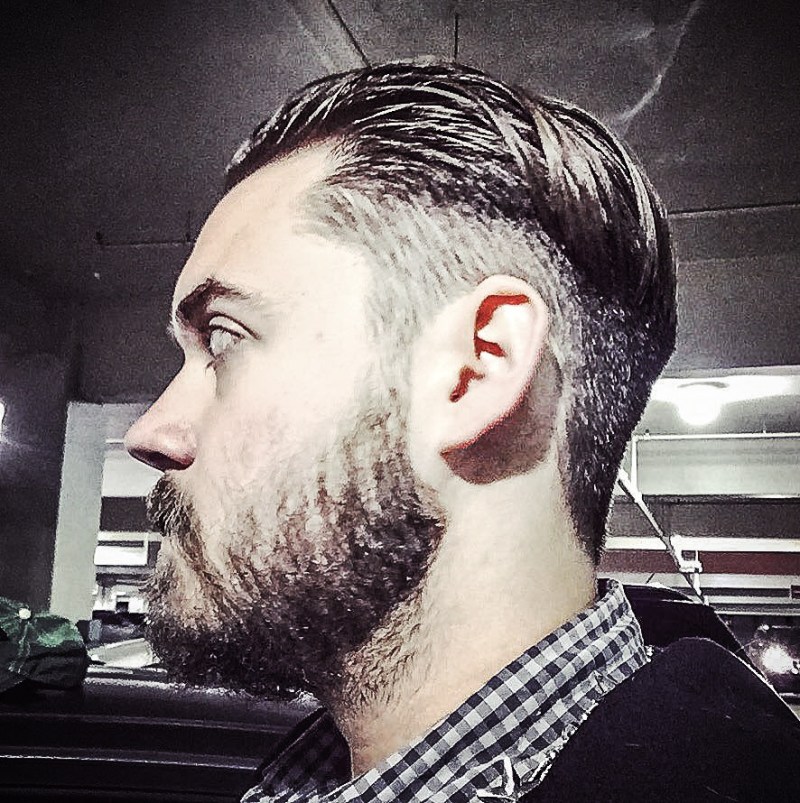
When did you start composing – and what or who were your early passions and influences?
I started composing early in high school, probably around age 14. That was when I started messing around on the piano and making up little “pieces” of music. Some of my influences back then were the contemporary Christian rock bands. I wrote a lot of pop songs, but I always had a fascination with film music. My idols at that time were Hans Zimmer and John Williams, one of which (Williams) still remains an idol to me today.
At what point did you realize you wanted to be a composer and why?
I probably became serious about composition by about age 16. This was when I realized that I was quickly improving at the craft. Plus, while I was watching movie, Glory, starring Matthew Broderick, I had an epiphany about how film music in particular was able to affect people’s emotions.
What do you personally consider to be incisive moments in your work and/or career?
I personally feel that the most incisive moments don’t really lie in the composing process of the work, but rather in the realization of the work during the first performance. During that time, I am put in the position of a normal audience member, and oftentimes I am surprised (most often pleasantly) by the outcome. It is during the first realization of the piece that I gain the most knowledge and understanding of the craft, being able to pick out specific moments in the piece that really seemed to connect with the audience, and other moments that didn’t have quite the effect that I hoped.
In terms of composing, who inspires you, and which scores do you love?
John Williams and Ralph Vaughan Williams are the first composers that come to mind, but a number of other composers play a lesser inspirational role in my music, i.e. Debussy, Mahler, Copland, Bernstein (Leonard & Elmer), and Puccini. It is very difficult to pick out a particular score, but I do have a particular liking of the E.T. film score, The Magnificent Seven film score, La Mer, Elsa’s Procession to the Cathedral from Wagner’s Lohengrin, etc.
What are currently your main compositional challenges?
My hardest challenge with every piece has always been to develop an idea long enough. Often times I have so many ideas and themes running through my head that I want to put all of them in a piece, but must restrain myself to a few of them, and then focusing on those chosen themes. This oftentimes makes for impatient writing sessions, because I become anxious to give the audience even more memorable material by moving on to the next idea.
What do you usually start with when composing?
I usually start a piece with the main theme/idea in mind. Then, I work on building up to that moment to make it the most memorable it can be.
The relationship between music and other forms of art – painting, video art and cinema most importantly – has become increasingly important. How do you see this relationship yourself and in how far, do you feel, does music relate to other senses than hearing alone?
I believe that music is destined to coexist with the other artforms, and even integrate with them. Music has the ability to give new meaning to whatever artform is being presented, and heighten the experience of the art’s witnesses.
Have you had an experience (of someone else’s work) which changed your musical thinking and ushered in a new creative period?
I have experienced a few such epiphanies, the most recent experience I can point to being Vaughan Williams’ Five Mystical Songs. I am always awed by Vaughan Williams’ ability to bring out the meaning of whatever text he is setting while still weaving an elegant, yet powerful piece of music.
How would you define the term “interpretation”? How important is it for you to closely work together with the artists performing your work?
I would say that interpretation is taking creative liberties whenever the score allows it. This could be allowed directly, by expressive text, i.e. rubato, or also indirectly, as in when the score is simply vague with its markings. When artists perform my work, I generally trust them to use the right amount of interpretation, but I also value the opportunity to work with them closely, just in case they may have specific questions that I could answer.
What is the piece of music you are most proud of?
Whichever is most recent!
What would be your ideal composing gig?
I would LOVE to write music for a Hollywood film.
If you weren’t a composer what would you be?
That’s a good question. I would probably go into the PeaceCorps and travel the world.
What composition of yours has been the most “successful” (however you define the word) – and is there a difference between your most successful work and your own personal favorite work?
I would say that a simple men’s chorus piece that I wrote some years back, Youth in Trouble, is the most successful. That is, it has received the most performances. My personal favorite pieces are my orchestral works, because they grant me the opportunity to truly test my craft. Writing for other venues is also rewarding, but because of the public nature of the symphony orchestra, I am provided a rare opportunity to write something is pleasing to the masses and also pleasing to my own creative instincts.
What do you have planned for the future? What projects are you currently working on (that you can talk about) and what are you hoping to accomplish in the new year?
For now, I am working on finishing my graduate studies at Butler University while building my composition portfolio. At the moment, I am working on a song cycle setting the poetry and verse of Alfred Lord Tennyson. Instead of a simple piano accompaniment, however, the soloist in this instance will be backed by a brass choir and percussion section. I am both excited and nervous about the outcome!
Within the next couple of years, I plan on moving to Los Angeles, where I can begin to work in the Hollywood film industry, where eventually I hope to begin writing music for the films produced there.
 Tim Gelhaus, Composer